Showing posts with label Science. Show all posts

Escaping Brain Rot: How Endless Scrolling Is Rewiring Our Minds—and What We Can Do About It

VIDEO ACADEMY

 Escaping Brain Rot: How Endless Scrolling Is Rewiring Our Minds—and What We Can Do About It


In a world where notifications ping constantly and feeds refresh endlessly, many of us feel a growing restlessness. That itch to check our phones, the struggle to finish a book or even a long article, the foggy feeling after hours of scrolling—it's become so common that it earned its own name: **brain rot**.

Coined as Oxford's Word of the Year in 2024, "brain rot" captures the mental fatigue and perceived decline in focus from overconsuming low-quality, trivial online content. But this isn't just slang; it's a reflection of a deeper shift in how our brains process information in the digital age. As someone who's felt this pull firsthand—finding it harder to dive into deep work while glued to screens for both leisure and productivity—I've been digging into the science behind it. The good news? We can fight back.


The Ancient Brain in a Modern World

Our brains haven't changed much since the days of hunter-gatherers. Back then, survival depended on spotting rare but critical signals: a predator in the bushes or ripe berries on a tree. When we detected something important, our brains released **dopamine**, that feel-good chemical motivating us to pay attention and act.

Fast-forward to today: We still have the same wiring, but instead of occasional threats or rewards, we're bombarded with constant novelty. Every like, notification, or viral clip triggers the same dopamine hit. Our brains can't distinguish between life-saving alerts and a silly meme—they both feel rewarding. This creates an **evolutionary mismatch**: Our environment has evolved at warp speed, while our neural hardware lags behind, stuck in the Stone Age.

Thanks to **neuroplasticity**—the brain's ability to rewire itself based on experiences—this constant stimulation is literally reshaping us. Since the smartphone boom around 2007, we've trained ourselves to crave quick hits of information. Sustained focus starts to feel unnatural, almost effortful. Studies show excessive social media use correlates with shorter attention spans, reduced working memory, and even changes in brain structure, like diminished activity in areas responsible for concentration and emotional regulation.

The Medium Shapes the Mind

Media theorist Marshall McLuhan once said, "The medium is the message." He meant that the way we consume information influences our thinking more than the content itself. Today, this rings truer than ever.

Platforms prioritize engagement: short vertical videos, autoplay, infinite scrolls. They're designed for **intermittent reinforcement**—like a slot machine, where the next swipe might deliver something amazing. This keeps us hooked, but it fragments our attention. We think we're in control, choosing what to watch, but the design dictates *how* we think: in bursts, expecting instant gratification.

Then there's the explosion of **memes**—originally Richard Dawkins' term for cultural ideas that spread like genes. In the internet era, they've become supercharged: bite-sized, emotionally punchy packets that replicate virally. They shape language (think Gen Z slang like "rizz," "gyatt," or "skibidi"), humor, and even worldviews, often without much context or depth. For younger generations growing up with tablets from toddlerhood, this becomes their primary cultural input, leading to vocabularies built on viral trends rather than books or real-world experiences.

The fallout? Teachers report students struggling with focus during lessons. Research links heavy short-form content consumption to anxiety, impatience with boredom, and declining tolerance for slower media like novels or documentaries. Boredom, once a spark for creativity and daydreaming, is now avoided at all costs—why reflect when an algorithm promises instant entertainment?


The Double-Edged Sword of the Digital Age

Don't get me wrong: The internet is a powerhouse for good. It democratizes knowledge, connects people globally, and enables self-taught skills that bypass traditional gates. Many careers—including creative and tech fields—owe their existence to online resources. With the right intent, we can use these tools to learn deeply, build businesses, or access expert-led courses on everything from coding to AI.

But mindless consumption tips the scale toward rot. Over time, we offload memory to search engines ("Why remember when I can Google?"), chase micro-dopamine hits, and skim surfaces instead of diving deep. Neuroscientist Nicholas Carr warned about this in *The Shallows*: The net isn't just changing what we think about, but *how* we think—toward shallowness.

Broader implications loom too: Reduced deep focus hampers productivity, creativity, and critical thinking. In a world facing complex challenges—climate, geopolitics, innovation—we need sustained attention, not fragmented snippets.

This year, in 2025, Oxford shifted to "rage bait" as Word of the Year, highlighting how platforms now hook us with outrage for engagement. It builds on brain rot: Constant stimulation leads to exhaustion, making us more susceptible to manipulative content.

Reclaiming Your Attention: Practical Steps to Rewire

The silver lining? Neuroplasticity works both ways. We adapted to distraction; we can adapt back to depth. It takes intention, like rebuilding fitness after inactivity, but it's doable.

Here are strategies that have helped me and are backed by research:

1. **Start Small with Progressive Training**  
   If 15-second clips are your norm, jumping to a 500-page book will fail. Build "attention muscle" gradually: 5 minutes of focused reading today, 10 tomorrow, scaling up. Over weeks, endurance grows.

2. **Design Your Environment for Focus**  
   Make distraction hard and focus easy. Charge your phone in another room during work. Use app blockers or grayscale mode to dull the visual appeal. Remove infinite feeds from your home screen.

3. **Embrace Intentional Boredom**  
   Set aside "nothing time"—30 minutes daily with no screens, podcasts, or stimulation. It feels uncomfortable at first (your brain craves hits), but pushing through resets dopamine baselines. Soon, slower rewards like reading or conversation feel satisfying again.

4. **Consume Mindfully**  
   After content, pause and reflect: What did I learn? How does it connect to my knowledge? This encodes information deeper, turning passive scrolling into active growth.

5. **Seek Out High-Quality Input**  
   Curate feeds for value: Long-form articles, podcasts, or courses. Platforms can enable learning—use them deliberately.

Society can help too: Schools teaching "attention literacy," workplaces prioritizing deep work over constant pings, and platforms adopting humane designs (fewer endless scrolls, more pauses).


A Call to Reflection

We've inherited brains tuned for selective attention in a sparse world. Today, thriving might mean relearning deep attention in an abundant one. Technology isn't the enemy—mindless overuse is.

Next time you finish something like this post, resist the urge to swipe away immediately. Sit with it for a minute. Let ideas settle. Ask: What stuck? What one change will I try tomorrow?

Small acts like these reclaim our minds from the scroll. If you've battled this and found tricks that work—timers, hobbies, digital detoxes—share in the comments. We're all in this together.

In the end, protecting focus, creativity, and insight isn't just personal—it's what keeps us fully human in a digital world.


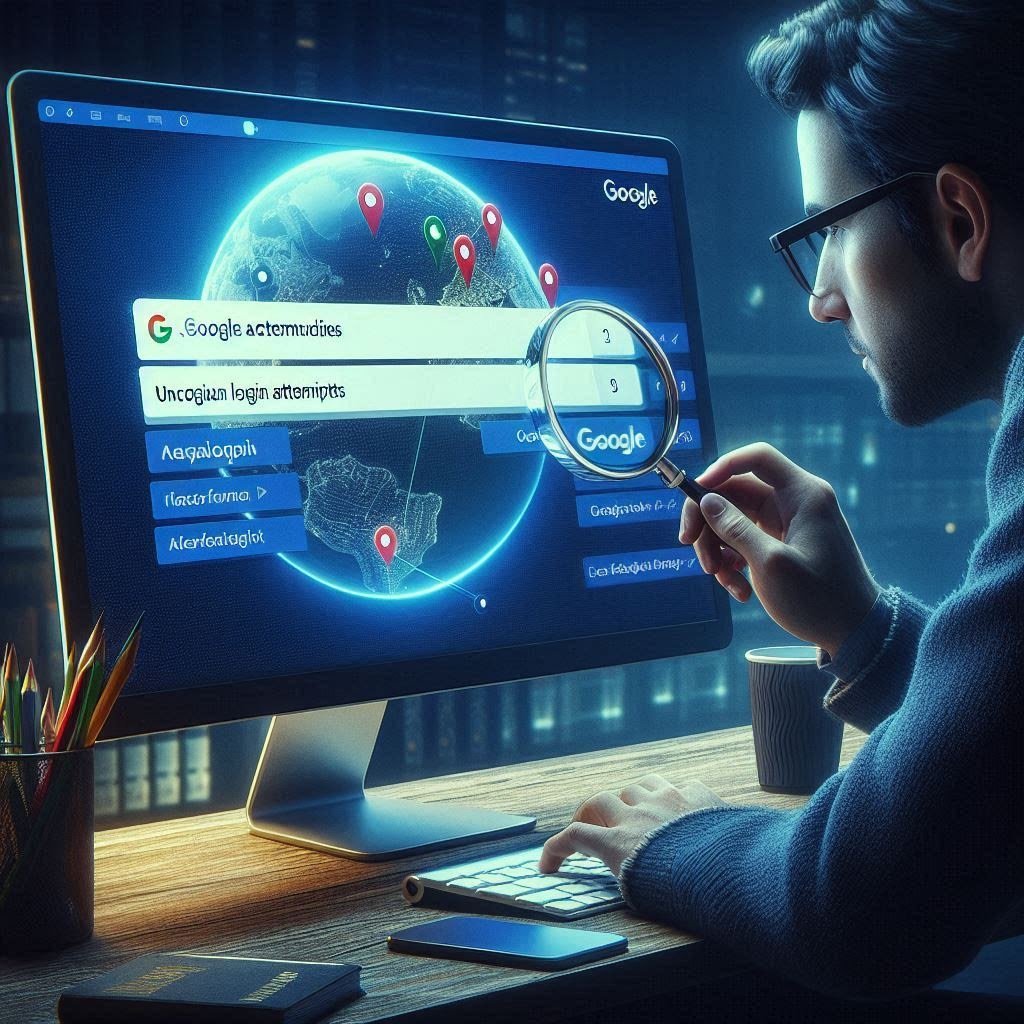
Here are five methods to determine whether your Google account has been compromised.

VIDEO ACADEMY

 Here are five methods to determine whether your Google account has been compromised.


Since Google accounts are among the most popular email services in the world, hackers attack them frequently. Even with strong security measures, there have been cases of Google account breaches in the past, which could have exposed financial, professional, and personal data kept in these accounts.


Now, there are a variety of indicators that a Google account has been compromised. Nonetheless, there are a few frequent indicators that might assist you in determining whether or not your account has been compromised.


Utilize the Google Password Checker.


Start by making sure your Google account password is secure. Google offers a service called Password Checkup that checks stored credentials, including the password to your Google account, for security breaches. To access this tool, go to https://passwords.google.com/ and select 'Go to Password Manager'. It tells you if your password has been compromised and, if not, suggests coming up with a new one.


Keep an eye on recent login activities.


Examine your account's recent login activity on a regular basis to spot any odd or questionable access. Go to https://myaccount.google.com/notifications to see the last 28 days' worth of login activity. Unexpected logins from strange places could be a sign of a possible hack, particularly if you observe activity from places other than your typical ones.


Verify the connected devices.


Check the list of devices linked to your Google account by going to the 'Your devices' section at https://myaccount.google.com/security. Verify that every device on the list is reputable and well-known. Devices connected to your account that are unknown or unapproved could indicate a security breach.


Examine approved websites and apps.


Examine the websites and apps that have been granted access to your Google account details. Go to the 'Third-party apps with account access' area at https://myaccount.google.com/security. Apps and websites that you no longer use or do not recognize should be removed since they may be security threats.


Verify the email forwarding configuration.


Check to see whether your emails are being sent to unknown addresses without your consent. Examine the forwarding settings by going to Gmail Settings -> Forwarding and POP/IMAP. If you believe that email forwarding has been compromised, delete any unauthorized email addresses and update your Google account password right away.


You can prevent potential breaches and unwanted access to your Google account by taking the actions listed here. Maintaining account security and safeguarding sensitive data requires controlling approved apps and devices, changing passwords on a regular basis, and monitoring account activity.


In brief:

Five Methods to Check Whether Your Google Account Has Been Stolen

Make use of the Google Password Checker Tool.


Use Google's Password Checkup tool to make sure your Google account password is secure. It checks stored passwords for compromises and, if needed, recommends setting new ones.

Keep an eye on recent login activity


Check the recent login activity for your account on a regular basis to look for any odd access patterns or logins from strange places, as these could point to a security breach.


Check the Linked Devices


Remove any unknown or unapproved devices from the list of devices linked to your Google account to make sure they are all trusted and recognized.


Review the apps and websites that have permission to access your Google account. Remove any that you don't recognize or no longer use to reduce security risks.

Check your email forwarding settings to ensure that your emails aren't being sent to unknown addresses. Look over Gmail's forwarding settings and quickly remove any unauthorized entries.


T-Mobile Delays Shutdown of Sprint’s 3G Network and Throws Shade at Partners

VIDEO ACADEMY


T-Mobile Delays Shutdown of Sprint’s 3G Network and Throws Shade at Partners


T-Mobile is postponing its arranged January closure of Sprint's inheritance 3G organization or CDMA organization since it asserts a portion of its accomplices "hasn't finished their obligation" to transition their clients to new organizations. 


In a new uninvolved forceful news discharge, spotted by the Verge, T-Mobile said it was "moving forward" in the interest of accomplices who hadn't moved previous Sprint CDMA clients over to new organizations yet and giving them an additional three months to do as such, pushing back the closure of the 3G organization from Jan. 1 to March 31, 2022. T-Mobile converged with Sprint last year and needed to auction a portion of Sprint's prepaid remote organizations as a component of the arrangement. 


Closing down Sprint's inheritance 3G organization, just as its LTE network next June, is essential for T-Mobile's work to focus on the extension of its 4G and 5G help. 


"There ought to be no more space for pardons," T-Mobile said in its report on Friday. "We have given considerably additional time and those accomplices can follow after accordingly with the work that is expected to guarantee nobody is left on some unacceptable side of the advanced gap." 


Despite the fact that it doesn't indicate any accomplices, almost certainly, T-Mobile is tossing conceal at Dish Network, which has alluded to T-Mobile as "the Grinch." T-Mobile sold Boost Mobile—Sprint's paid ahead of time MVNO that serves 9 million clients—to Dish Network to get its consolidation endorsed. 


The two organizations have been battling noisily and out in the open over the movement cutoff time in the course of recent months. On one side, you have T-Mobile, which told Dish in 2020 that it would destroy the 3G organization in 2022. The move came as an astonishment to Dish, as the organization comprehended that closure was quite a long while away. T-Mobile keeps up with that the organization has had a lot of time to relocate. 


On the opposite side, you have Dish, which considers T-To be's activities as against serious. It additionally brings up that it's an especially tough chance to attempt to get new telephones for Boost Mobile clients considering the worldwide chip lack, the Verge announced. 


"A constrained movement of this scale under this sped up time span is just unrealistic and will leave possibly a huge number of Boost supporters disappointed and without cell administration come January 1, 2022," Dish said in a letter to the Federal Communications Commission in April. 


When T-Mobile closes down the 3G organization, Boost Mobile clients with more established telephones still on that organization will at this point don't approach cell administration.

SpaceX planning to launch the first orbital starship test flight in July

VIDEO ACADEMY


SpaceX planning to launch the first orbital starship test flight in July


SpaceX could operate the starship's first orbital test flight in a few weeks.

 According to CNBC, SpaceX President Gwynne Shotwell told them at the Online International Space Development Conference that the company was shooting "for July" when planning an orbital trip. 

Shotwell was aware of the challenges, but said his determination was "in the true sense" of the original journey.

The current orbital flight plan from Boca Chika in Texas has a starship prototype and its super-heavy booster stage has been lowered into the Gulf of Mexico about three minutes later. 

The spacecraft entered orbit and landed a soft water near Hawaii after a total time of about 90 minutes.

As before, it doesn't anticipate any major complications - and that's the biggest issue for SpaceX so far. 

This includes high-altitude aircraft, with its own portion of the risk in orbit. Although some major disadvantages exist in the past, the corrections made since then do not guarantee that this time will guarantee a transparent trip.

Apple and Google mobile ecosystem dominance under scrutiny by UK antitrust regulator

VIDEO ACADEMY

 Apple and Google mobile ecosystem dominance under scrutiny by UK antitrust regulator


For many years, Google and Apple are the two biggest and most dominant names in mobile ecosystems globally, but the UK's competition regulator is now asking whether this duopoly is offering phone users the best deal.


On Tuesday, the Competition and Markets Authority, the country's antitrust regulator, announced that it's "taking a better look" at iOS and Android. This isn't like a full probe, it's just a precursor during which the CMA will consider whether there's enough evidence that the 2 companies could be stifling competition to justify opening a formal investigation.


"Apple and Google control the foremost gateways through which individuals download apps or browse the online on their mobiles -- whether or not they have to buy for for ,  The CMA is specifically checking out evidence that Apple's and Google's dominance within the market is stifling competition, or that it might be leading to people paying higher prices for devices, apps and other services.


Apple and Google didn't immediately answer request for comment.
This closer scrutiny comes as a results of a post-Brexit push by the united kingdom to research the actions of tech giants through its newly established Digital Markets Unit. Previously it had relied on the EU's Competition Commission to fulfil this role, however it's still working with the ecu regulator because the two agencies conduct simultaneous investigations into potential ad data abuse by Facebook.

 The CMA is additionally investigating Apple separately over App Store developer terms.


Hope this content is helpful for you. If you think so then go to my YouTube channel and subscribe it. Your one subscribe gives me a lot of inspiration to write and create more blog and videos. Thanks for reading.

Unknown Facts about DARK WEB

VIDEO ACADEMY

 Unknown Facts about DARK WEB


The Dark Web is a component of the World Wide Web that exists in the Dark Net or the Hidden Net. The internet we use covers only five to six percent of the dark net. It is a kind of hidden network for public internet users. Access to it requires specific software, configuration or approval. 

The Dark Web is basically a part of the Deep Web. Ordinary search engines cannot enter this part. Although sometimes the term Deep Web is mistakenly used to refer to the Dark Web. But while everyone can enter the Dark Web under certain conditions, ordinary people cannot enter the Deep Web. Darknet, which forms the Dark Web, consists of tiny friend-to-friend, peer-to-peer networks, There are also large networks such as Freenet, iTupi and Tor, and these networks are run by public organizations and individuals.

 Dark Web users are known as Clearnets on the general web because of their unencrypted nature. The Tor network is also known as Onion Land. This is because Deep Web is a high-level domain, Suffix.onion, and the way to use the
Internet in secret is onion routing.


The Dark Web is often confused with the Deep Web, That part cannot be searched by search engines. This confusion lasted until at least 2009.Since then, especially after the report on the Silk Road, two issues have been confused, Despite the recommendation that they are separate issues. Darknet websites are only for certain networks such as Tor ("Onion Router") and ITUP ("Invisible Internet Project").Tor browsers and Tor-accessible sites are widely used by Darknet users and can be identified by the ".onion" domain. 

Tor focuses on giving users the opportunity to use the Internet anonymously, and ITP emphasizes hosting websites on the Darknet anonymously. The identity and location of Darknet users cannot be determined due to the layered encryption system. Darknet encryption technology transmits information through a large number of secondary servers, providing protection of user anonymity and ensuring anonymity. 

The transmitted information can only be decrypted through a subsequent node in the plan that leads to the 
exit node. 

A complex system makes it almost impossible to rearrange nodes and decrypt data in a layer-by-layer manner. Darknet is also used to carry out various illegal activities such as illegal trade, forums, media exchanges for pedophiles (a person who is sexually attracted to children) and terrorists to carry out terrorist activities. At the same time, some traditional websites create alternative access to the Tor browser, allowing users to connect with Darknet users. For example, a newspaper called Propablika launched a new version of their website for Tor users.

Hacking groups and services:

Many hackers sell their services individually or as part of a group. Such groups include xDedic, Hackforum, Trojanforge, Mazafaka, dark0de and TheRealDeal Darknet Market. Some have again been known to track pedophiles and extort money from them. Cybercrime and hacking services related to financial institutions and banks are also available on the Dark Web. Attempts have been made by various government and non-government organizations to monitor all these activities And a list of all the tools that have been used to complete this test can be found in the Procedure Computer Science Journal. The use of Internet-scale DNS attacks the Distributed Reflection Daniel of Service (DRDOS) by subverting the Dark Web.

Many hacking groups, such as Code: Green, hire hackers based on their qualifications. There are many fraudulent * .onion sites that offer software downloads, However, those software are attacked by Trojan horse or backdoor.

Hoaxes and unverified content:


There are reports of professional assassins and professional assassins being hired, However, it is believed that none of this is exclusively a scam or similar. The builder of the Silk Road was arrested by the Homeland Security Investigation (HCI); The reason was to hire a professional killer using his site and the Dark Web to kill six people, which was later dismissed. It is rumored that the public killer is found on the Dark Web. The term “red room” comes from Japanese animation and urban legend of the same name. However, all reports are considered hoaxes due to lack of evidence. On June 25, 2015, a channel called Obscure Horror Corner published a review of a creepy indie game called Sad Satan ,According to their claim, they found it through the Dark Web. Their report is suspected due to various inconsistencies.

Why hurricanes devastate some places over and over again – a meteorologist explains

VIDEO ACADEMY

 Why hurricanes devastate some places over and over again – a meteorologist explains


Every coastline in the North Atlantic is vulnerable to tropical storms, but some areas are more susceptible to hurricane destruction than others. 
 
To understand why as the region heads into what’s forecast to be another busy hurricane season, let’s look more closely at how tropical storms form and what turns them into destructive monsters. 
Ingredients of a hurricane
 
Three key ingredients are needed for a hurricane to form: warm sea surface water that’s at least about 80 degrees Fahrenheit (26.5 C), a thick layer of moisture extending from the sea surface to roughly 20,000 feet and minimal vertical wind shear so the thunderstorm can grow vertically without interruption. 
These prime conditions are often found in the tropical waters off the west coast of Africa.


Hurricanes can also form in the Gulf of Mexico and the Caribbean, but the ones that start close to Africa have thousands of miles of warm water ahead that they can draw energy from as they travel. That energy can help them grow into powerful hurricanes.
 
Wind currents set most tropical storms on a course westward from Africa toward the Caribbean, Florida and the Gulf of Mexico. Some drift northward into the midlatitudes, where the prevailing winds shift from west to east and cause them to curve back out into the Atlantic. 
Others encounter cooler ocean temperatures that rob them of fuel, or high wind shear that breaks them apart. That’s why tropical cyclones rarely hit northern states or Europe, though it does happen.


Time of season also influences hurricane paths

Early in the season, in June and July, sea surface temperatures are still warming and atmospheric wind shear slowly decreases across the open Atlantic. Most early-season hurricanes develop in a small area of the Caribbean and Gulf of Mexico where prime conditions begin early. 
They typically form close to land, so coastal residents don’t have much time to prepare, but these storms also don’t have ideal conditions to gain strength. Texas, Louisiana and Mississippi, as well as Central America, are more likely to see hurricane strikes early in the season, as the trade winds favor an east-to-west motion. 
 
As surface waters gain heat over the summer, hurricane frequency and severity begin to increase, especially into the peak hurricane months of August through October. 
Toward the end of the season, trade winds begin to shift from west to east, ocean temperatures start to fall, and cold fronts can help divert storms away from the western Gulf and push them toward the Florida Panhandle.


Shape of the seafloor matters for destructiveness

The shape of the seafloor can also play a role in how destructive hurricanes become.
Hurricane strength is currently measured solely on a storm’s maximum sustained wind speeds. But hurricanes also displace ocean water, creating a surge of high water that their winds push toward shore ahead of the storm.
 
This storm surge is often the greatest threat to life and property from a hurricane, accounting for about 49% of all direct fatalities between 1963 and 2012. Hurricane Katrina (2005) is a prime example: An estimated 1,500 people lost their lives when Katrina hit New Orleans, many of them in the storm surge flooding.
If the continental shelf where the hurricane hits is shallow and slopes gently, it generally produces a greater storm surge than a steeper shelf.
 
As a result, a major hurricane hitting the Texas and Louisiana Gulf Coast – which has a very wide and shallow continental shelf – may produce a 20-foot storm surge. However, the same hurricane might produce only a 10-foot storm surge along the Atlantic coastline, where the continental shelf drops off very quickly.
Where are the hurricane hot spots?
 
A few years ago, the National Oceanic and Atmospheric Administration analyzed the probability of U.S. coastlines’ being hit by a tropical storm based on storm hits from 1944 and 1999.
It found that New Orleans had about a 40% chance each year of a tropical storm strike. The chances rose for Miami and Cape Hatteras, North Carolina, both at 48%. San Juan, Puerto Rico, which has seen some devastating storms in recent years, was at 42%.


Hurricanes, which have sustained wind speeds of at least 74 miles per hour, were also more frequent in the three U.S. locations. Miami and Cape Hatteras were found to have a 16% chance of a direct hit by a hurricane in any given year, and New Orleans’ chance was estimated at 12%.
Each of these locations is vulnerable to a hurricane because of its location, but also its shape. North Carolina and Florida “stick out like a sore thumb” and are often grazed by hurricanes that curve up the east coast of the U.S.


Climate change changes the risk

As sea surface temperatures rise with the warming of the planet, more areas outside of these usual hurricane regions may see more tropical storms.
I analyzed tropical cyclones in the North Atlantic that made landfall from 1972 to 2019 to look for changes over the past half-century.
 
During the first six years of that period, 1972-77, the Atlantic averaged four direct hits per year. Of those, 75% were in the usual hurricane-prone areas, such as the Southern United States, the Caribbean and Central America. Six storms made landfall elsewhere, including New England, Canada and the Azores.
By 2014-19, the Atlantic averaged 7.6 direct hits per year. While the U.S. took the majority of those hits, Europe has been showing a steady increase in cyclones making landfall. Major hurricanes – those with sustained wind speeds of 111 miles per hour and above – are also more common than they were in the 1970s and ‘80s.
 
While southern coastal locations of the United States may be the most vulnerable to tropical cyclone impacts, it is important to understand that a devastating cyclone can hit anywhere along the Atlantic and Gulf coasts.
The National Hurricane Center is forecasting another busy season in 2021, though it is not expected to be as extreme as 2020’s record 30 named storms. Even if an area hasn’t experienced a hurricane in several years, residents are advised to prepare for the season as if their area will take a hit – just in case.


Huawei Launches Operating System After U.S. Blacklist Restricts Company's Access to Google

VIDEO ACADEMY

 Huawei Launches Operating System After U.S. Blacklist Restricts Company's Access to Google


Huawei is expected to announce the launch of its own operating system, HarmonyOS , Wednesday after it lost access to Google's mobile services when the U.S. placed the Chinese telecommunications company on a trade blacklist two years ago.

The company also does not have access to some computer chips needed to power its devices. The U.S. blacklisted Huawei after it suspected the company might be aiding China's espionage efforts, an accusation it denies.
"It'll be interesting to see what the HarmonyOS user interface looks like and whether there really are some features that give it a leg up with some users, but I'm not holding my breath," Bryan Ma, vice president of client devices research at market research company IDC, told the Associated Press.

For more reporting from the Associated Press, see below:
Once the world's largest smartphone maker, Huawei fell out of the top five list globally last year, nudged aside by South Korea's Samsung, according to data from market research firm Canalys.
Other Chinese smartphone makers such as Xiaomi, OPPO and Vivo have since overtaken Huawei in terms of global sales. Huawei currently ranks seventh globally and third in China, following a 50 percent drop in smartphone shipments in the first quarter of this year compared to last year.

Last November, Huawei also sold its budget Honor smartphone brand as it sought to cushion the impact of U.S. sanctions.
Huawei's HarmonyOS smartphone rollout is a workaround for its lack of access to Google services, especially for smartphones that it sells abroad. While handsets that were sold prior to Huawei's blacklisting continue to run Google services, its newer devices will have no access to Google's mobile services or updates.
To solve this problem, Huawei launched its own Huawei Mobile Services (HMS) platform that lets developers launch apps for Huawei devices. In March, Huawei said that over 120,000 apps were now on its app store and using HMS, although it is still missing apps popular overseas such as Instagram, Twitter and Facebook.
Owners of Huawei phones who have no access to Google services won't be able to download apps such as Gmail or YouTube. Instead, HMS offers shortcuts to the mobile sites of such services.

Google is blocked in China, so Huawei users in China are unlikely to be affected by this. But the lack of access to Google services makes Huawei a less attractive choice for overseas users, who are used to watching videos on YouTube or using the Gmail email app, analysts say.

Attempts to popularize Huawei's new HarmonyOS may be an uphill task. Attempts to challenge dominant operating systems have usually fallen flat, such as Microsoft's Windows Phone operating system and Samsung's Tizen operating system. It is unpopular in the smartphone world but is used in smartwatches.
"It still comes back to all the discussion that's been happening over the past couple years which is, if there's no Google services, that's a big problem," Ma said.

However, Huawei's move to a mobile operating system that can run on smartphones could give it a new business model of distributing it to other smartphone vendors in China that might be keen to earn revenue by listing their apps on Huawei's mobile services.


"HarmonyOS might be quite appealing to vendors who don't have the resources to build their own OS," said Nicole Peng, vice president of mobility at market research firm Canalys.

Microsoft is using AI to turn natural language into code

VIDEO ACADEMY

 Microsoft is using AI to turn natural language into code


Microsoft was granted an exclusive licence to OpenAI's groundbreaking GPT-3 language model last year. The technology is one of the most sophisticated text program's in the industry and was powered by Microsoft's Azure AI. The deal saw Microsoft spend $1 billion to become OpenAI's exclusive cloud partner and that included the licence to GPT-3.

The company will now use the advanced technology to drive its push toward a more natural language for coding. Currently, the feature is limited to Microsoft's PowerFX toolset which is a simple coding language derived from Excel formulas. The big advancement here is that people who don't necessarily know coding can use natural language to query and find the right code in the system.

Speaking with The Verge, Microsoft's Charles Lamanna said, "There’s massive demand for digital solutions but not enough coders out there. There’s a million developer shortfall in the US alone, so instead of making the world learn how to code, why don’t we make development environments speak the language of a normal human?”

The programs made in the low-code environment run as web apps and are meant to help companies tackle basic tasks like analytics, data visualisation and workflow automation without the need to hire a dedicated programmer for the job.
The new feature will be previewed in June and will also leverage AI-based Programming by examples or PBE where users can create scripts based on input-output examples from other code.

India passes grim milestone of 200,000 COVID-19 deaths

VIDEO ACADEMY

 India passes grim milestone of 200,000 COVID-19 deaths


India became the fourth country in the world to pass 200,000 deaths from the COVID-19 pandemic on Wednesday as the country continues to struggle against a deadly second wave of infections that has overwhelmed most of the country's hospitals.


Data compiled by Johns Hopkins University indicated that Indian health officials had recorded just over 201,000 deaths from the virus as of Wednesday morning, U.S. eastern time. India has now also recorded nearly 18 million total cases of COVID-19 since the pandemic began, second only to the U.S.
The country joins a grim club of nations who have experienced the worst of the pandemic; only India, the U.S., Mexico and Brazil have recorded more than 200,000 deaths since the beginning of 2020.


U.S. COVID-19 deaths sat at just above 573,000 as of Wednesday, far outpacing any other country including Brazil, which has recorded the second-most deaths at 395,000.


Indian hospitals face dwindling supplies, not enough vaccines and insufficient space for new patients as the country's death toll and case count continue to climb; supplies including oxygen are in particular short supply, and have left many with severe COVID-19 symptoms unable to find a hospital where they can receive treatment.


Prime Minister Narendra Modi said last week that the country was in its most serious battle against the virus so far.
"The country is today fighting a very big battle against COVID-19. The situation had improved for a while, but the second COVID-19 wave has come like a storm," Prime Minister Narendra Modi said last week during a national address.


"I express my condolences to all those who have lost their loved ones due to COVID-19," he added. "Just like a member of your family, I am with you in this hour of sadness. The battle is long and difficult, but we have to overcome it together with our dedication and courage."
New Delhi, the country's capital, remains under lockdown as officials cite a test positivity rate as high as 36 percent throughout the country.


More young people are getting hospitalized as a 'stickier,' more infectious coronavirus strain becomes dominant

VIDEO ACADEMY

 More young people are getting hospitalized as a 'stickier,' more infectious coronavirus strain becomes dominant


What used to be a mysterious new variant first detected in the UK is now the most dominant coronavirus strain in the US.


And unlike the original strain of the novel coronavirus, the more contagious B.1.1.7 strain is hitting young people particularly hard.

"(Covid-19) cases and emergency room visits are up," said Dr. Rochelle Walensky, director of the US Centers for Disease Control and Prevention.

"We are seeing these increases in younger adults, most of whom have not yet been vaccinated."

Now doctors say many young people are suffering Covid-19 complications they didn't expect.

And it's time to ditch the belief that only older adults or people with pre-existing conditions are at risk of severe Covid-19.

Why B.1.1.7 is more contagious :

        Viruses mutate all the time, and most mutations aren't very important. But if the mutations are significant, they can lead to dangerous new variants of a virus.

"The B.1.1.7 variant has mutations that allow it to bind more" to cells, said Dr. Jonathan Reiner, a CNN medical analyst and professor of medicine and surgery at George Washington University.

"Think of this mutation as making the virus stickier."

Coronavirus latches onto cells with its spike proteins -- the spikes surrounding the surface of the virus.

"There is a little difference in the way the (B.1.1.7) spike protein holds that makes it stick to your cells a little more easily," said emergency physician Dr. Megan Ranney, director of the Brown-Lifespan Center for Digital Health.

With the original strain of the novel coronavirus, "you need a certain inoculum -- a certain amount of virus -- in order for the infection to basically stick," Reiner said.

"Is one viral particle enough to make you sick? No, probably not. On the other hand ... sometimes a massive inoculum can kill an otherwise healthy person. And we've seen that in health care workers," he said.

"So these new variants, particularly the UK variant, seem to be stickier. So the notion is that it's more contagious, so to speak, because potentially you don't need as much of an inoculum to get sick."

What this means in real life: "You can be in a place and maybe have a briefer exposure or have a smaller exposure -- more casual exposure -- and then get infected," Reiner said.

And because B.1.1.7 is stickier, "you may indeed have a higher viral load."

"If you have a higher number of viral particles in your respiratory tract, then it's going to be easier to spread it to other people," Ranney said.

That's another reason why it's so important for young adults to get vaccinated.

More young people are being hospitalized with Covid-19 :

        B.1.1.7 cases have now been reported in all 50 states, the CDC said.

"What we're seeing in a bunch of places now is sick, young people -- hospitalized young people. Whereas earlier on in the pandemic, it was primarily older people," Reiner said.

"The reason for this might be as simple as the older population in this country has either been exposed to this virus, killed by the virus, or now vaccinated against the virus."

As of Saturday, more than 80% of people age 65 and over have received at least one dose of vaccine, and 65% have been fully vaccinated, according to CDC data.

"The unvaccinated -- those are the people who are getting infected -- we're seeing a large number of young people, and they're the ones we're seeing in hospitals now."

In March, New Jersey saw a 31% jump in Covid-19 hospitalizations among young adults ages 20 to 29, the state health commissioner said. And the 40-49 age group saw a 48% increase in Covid-19 hospitalizations.

Ranney said she's also noticed a stark change in who's getting hospitalized.

"This has been kind of a gradual increase in the proportion of folks who are younger over the last couple of months," she said, citing data from COVID-NET -- which tracks cases from more than 250 hospitals in 14 states.

"Looking at the week of December 26 or January 2, age 65-plus would be, say, 3,000 (hospitalizations). And then everything else together is 3,000. More than 50% were age 65-plus."

But by March 27, "it was about one-third (ages) 18 to 49 ... about one-third ages 50 to 64, and then about one-third 65-plus," Ranney said.

As an emergency room doctor, Ranney said she regularly sees young, previously healthy patients struggling with coronavirus.

"I see at least a few people on every ER shift that I work who are there because they are having persistent trouble breathing or other side effects as a result of Covid-19," she said.

Ranney said she generally defines "young people" as those under 50. But "no matter which age cutoff you use, right now, we're seeing more B.1.1.7 than the older variants."

"We're certainly seeing it more in 20s and 30s as well," she said. "And people in their 20s and 30s are less likely to be vaccinated and more likely to be out and about."

The vast majority of positive coronavirus tests don't go through genomic sequencing to figure out whether it's B.1.1.7 or another strain. But as genomic sequencing increases nationwide, health experts say there's no doubt B.1.1.7 is fueling more hospitalizations among young people.

Dr. Justin Skrzynski is a Covid hospitalist -- or specialist in the care of Covid-19 patients -- at Beaumont Hospital, Royal Oak in Michigan. He said the facility sends a portion of its coronavirus samples to the state for DNA analysis.

"Right now, the regular Covid test we do -- that's still just showing Covid (or) no Covid," Skrzynski said.

"But we do send a lot of those out to the state, and we are seeing something like 40% of our patients now (with) B.1.1.7."

Reiner said he thinks both human behavior and the "stickiness" of B.1.1.7 are leading to more Covid-19 hospitalizations among young people.

"It may be simply because of just (more young people) getting infected ... and perhaps the inoculum (viral load) is higher," he said.

Sometimes, young people can be victims of their own strong immune systems.

Throughout the pandemic, doctors have noticed some young, previously healthy patients suffer from Covid-19 cytokine storms. That's basically when someone's immune system overreacts -- potentially causing severe inflammation or other serious symptoms.

As B.1.1.7 keeps spreading, it's possible the number of young people with cytokine storms will increase, Reiner said.

"We've certainly seen people come into our hospital, very young people (in their early 20s) ... need to be put on ECMO, which is basically a heart-lung machine for days or even weeks because they come in with cardiomyopathy -- which is a response to a cytokine storm," he said.

'Covid-19 doesn't have to kill you to wreck your life' :

       As more young people get infected, doctors are worried they'll see more of a disturbing trend they've noticed for months -- long-term complications.

"I cannot tell you how many people I've taken care of in the ER who are in their 20s, 30s and 40s, who are never sick enough to end up in the ER with Covid, but who now have long-lasting respiratory difficulties," Ranney said.

"Or they have persistent loss of taste and smell, and they're losing weight because there's no joy from eating. Or they have that kind of brain fog that we hear about with long Covid. And it's not universal. It's not every person who gets Covid who's going to get that. But there is the reality that this disease is not benign -- regardless of whether they get hospitalized or in the ICU," she said.

"So I think there's this false sense of both 'I'm immune to it just because I'm young,' and 'Even if I catch it, I'll be fine.' You may be lucky. And that may be true, that if you catch it, you'll be fine. But there's also a chance that you won't."

Reiner said some long-haul symptoms in young people have lasted roughly a year now -- "debilitating symptoms that have come in the aftermath of their coronavirus infection," he said.

"So what I would say to young people is that Covid-19 doesn't have to kill you to wreck your life." 

Mixed messages from states don't help :

        Health experts say it's critical to keep practicing Covid-19 safety precautions until many more people get vaccinated. Yet some states have ditched mask mandates or reopened bars to full capacity just as B.1.1.7 was spreading rapidly.

And that's likely fueling the spread of B.1.1.7 among young people, Reiner said.

"They're the people going out to the bars. They're the people meeting for brunch. The older people in this country have been hunkered down for a year because they've been worried about dying from this virus. Young people in this country haven't worried so much about dying from this virus. And there's a lot of pandemic fatigue."

Reiner said he understands many businesses have been devastated and need to fully reopen once it's safe to.

"But easing the mask mandate makes zero sense," he said. "There is no economic hardship, and there's no personal hardship to require a person to wear a mask when they're out in public."

Ranney said young people may misinterpret the lifting of safety mandates.

"When you hear that ... as a regular person who's not following the day-to-day (data), you think, 'Well, my governor wouldn't open it if it's not safe,'" she said. "So I think there is that mixed message."

B.1.1.7 is also spreading among children :

It's not just young adults who are getting infected with this variant. More cases of B.1.1.7 are showing up among children, too.

"Absolutely, we are seeing a higher number of kids test positive for B.1.1.7 than we have seen for the other virus types," Ranney said.

"It's not necessarily that kids are more susceptible to B.1.1.7. But it's just that they're more likely to be exposed to it both because they're out and about, and because this version is more transmissible."

While classroom learning is relatively safe when the right safety precautions are taken, health officials say after-school activities -- such as youth sports and other extracurriculars -- are causing more children to get Covid-19.

And while Covid-19 deaths among children are extremely rare, they have happened.

Some children who contracted coronavirus have experienced MIS-C, or multisystem inflammatory syndrome in children, which is rare but can sometimes cause severe illness or death. 

The easiest ways to quash B.1.1.7 :

        The good news about B.1.1.7: We don't need a new playbook to fight it. But we do have to follow the existing playbook closely to snuff out this highly contagious variant.

"Even though it is more transmissible, every piece of data that we have supports that we can still stop it using the same techniques that we have used for other variants," Ranney said.

"So it's still about masks and physical distancing and ventilation and vaccines. And our current vaccines -- and this is really critical -- the current vaccines work really well against B.1.1.7."

But here's the catch: The longer a virus circulates, the more opportunities it has to develop new mutations. And if the mutations are significant, they can lead to more problematic variants -- including some that might evade vaccine protection.

"To me, this is a warning sign. This is a shot across the bow of what could happen," Ranney said.

B.1.1.7 "does spread more easily. It is increasing the number of cases. We're seeing some increases in hospitalizations, probably due to the B.1.1.7 spread. But the vaccines work against it," she said.

"There may be future variants for which we are not so lucky."


PLUTONIUM AND BOMBS

VIDEO ACADEMY


PLUTONIUM AND BOMBS


The very existence of plutonium is often viewed as the work of the devil.* As the most important ingredient in nuclear bombs, it may someday be responsible for killing untold millions of people, although there are substitutes for it in that role if it did not exist. If it gets into the human body, it is highly toxic. On the other hand, its existence is the only guarantee we have that this world can obtain all the energy it will ever need forever at a reasonable price. In fact, I am personally convinced that citizens of the distant future will look upon it as one of God's greatest gifts to humanity. Between these extremes of good and evil is the fact that if our nuclear power program continues to be run as it is today, the existence of plutonium will have no relevance to it except as a factor in technical calculations.

Clearly, there are several different stories to tell about plutonium. We will start with the future benefits, then discuss the weapons connection, and conclude with the toxicity question.

Fuel of the Future

As uranium occurs in nature, there are two types, U-235 and U-238, and only the former, which is less than 1% of the mixture, can be burned (i.e., undergo fission) to produce energy. Thus, present-day power reactors burn less than 1% of the uranium that is mined to produce their fuel. This sounds wasteful but it makes sense economically, because the cost of the raw uranium at its current price represents only 5% of the cost of nuclear electricity (see Chapter 13 Appendix). However, there is only a limited amount of ore from which uranium can be produced at anywhere near the current price, perhaps enough to provide lifetime supplies of the fuel needed by all nuclear power plants built up to the year 2025. Beyond that, uranium prices would escalate rapidly, doubling the cost of nuclear electricity within several decades.

Fortunately, there is a solution to this problem. The fuel for present-day American power plants is a mixture of U-238 and U-235. As the reactor operates, some of the U-238, which cannot burn, is converted into plutonium. This plutonium can undergo fission and thus serve as a nuclear fuel. In fact, some of it is burned while the fuel is in the reactor, enough to account for one-third of the reactor's total energy production. But some of it remains in the spent fuel from which it can be extracted by chemical reprocessing. This plutonium could be burned in our present power reactors, but an alternative is to use it in another type of reactor, the breeder, whose fuel is a mixture of plutonium and uranium (U-238). Much more of the U-238 in the breeder is converted to plutonium than in our present reactors, more than enough to replace all of the plutonium that is burned. Thus, a breeder reactor not only generates electricity, but it produces its own plutonium fuel with extra to spare. It only consumes U-238, which is the 99+% of natural uranium that cannot be burned directly; therefore, it provides a method for indirectly burning this U-238. With it, nearly all of the uranium, not less than one percent as in present type reactors, is eventually burned to produce energy. About a hundred times as much energy is thus derived from the same initial quantity. That means that instead of lasting only for about 50 years, our uranium supply will last for thousands of year. As a bonus, the environmental and health problems from uranium mining and mill tailings will be reduces a hundred fold. In fact, all uranium mining could be stopped for about 200 years while we use up the supply of U-238 that has already been mined and is now in storage.


Deriving 100 times as much energy from the same amount of uranium fuel means that the raw fuel cost per kilowatt-hour of electricity produced is reduced correspondingly. In fact, the fuel costs per unit of useful energy generated in a breeder reactor are equivalent to those of buying gasoline at a price of 40 gallons for a penny! (see Chapter 13 Appendix). Instead of contributing 5% to the price of electricity as in present-type reactors, the uranium cost then contributes only 0.05% in a breeder reactor. If supplies should run short, we can therefore afford to use uranium that is 20 times more expensive, for even that would raise the cost of electricity by only (20 x .05 =) 1%. How much uranium is available at that price?

The answer is effectively infinite because it includes uranium separated out of seawater.1 The world's oceans contain 5 billion tons of uranium, enough to supply all the world's electricity through breeder reactors for several million years. But in addition, rivers are constantly dissolving uranium out of rock and carrying it into the oceans, renewing the oceans' supply at a rate sufficient to provide 25 times the world's present total electricity usage.2 In fact, breeder reactors operating on uranium extracted from the oceans could produce all the energy humankind will ever need* without the cost of electricity increasing by even 1% due to raw fuel costs.

The fact that raw fuel costs are so low does not mean that electricity from breeder reactors is very cheap. The technology is rather sophisticated and complex, involving extensive handling of a molten metal (liquid sodium) that reacts violently if it comes in contact with water or air. Largely as a result of the safety precautions required by this problem, the cost of electricity from the breeder will be substantially higher at today's uranium prices than that from reactors now in use.3 Nevertheless, France, England, and the Soviet Union have continued with developing breeder reactors, and several other countries, including Germany and Japan, are involved to a lesser degree. The American program was at the forefront 20 years ago, but it became a political football and is now essentially dead.

On the surface, the opposition to the U.S. breeder reactor is based on the fact that uranium supplies are plentiful and cheap, leaving little incentive for an expensive development program at this time (less expensive research is continuing, most notably in a test reactor at the Hanford site in Washington State). Why, then, have other countries continued to press on with their development programs? First, even if development goes forward at the hoped-for pace, it will be many years before the first commercial breeder can become operational and many more before its use would become widespread; it is better to start up any new technology slowly, allowing the "bugs" to be worked out before a large number of plants is built. Second, we are not that certain about our uranium resources; they may be substantially below current estimates. Having the breeder reactor ready would be a cheap insurance policy against that eventuality, or against any sharp increase in uranium prices for whatever the reason. And third, the breeder reactor development program has substantial momentum, with lots of scientists, engineers, and technicians deeply involved. It is much more efficient to carry the program to completion now than to stop it, allow these people to become scattered, and then start over with a new team of personnel later.

Not far beneath the surface, there is substantial opposition to the breeder because of distaste for plutonium and general opposition to nuclear power. There are also some fears about the safety of breeder reactors, but experts on that subject (of which I am not one) maintain that they are extremely safe, and even safer than present reactors.3,8 They have the important safety advantage of operating at normal pressure rather than at very high pressure, as is the case for present reactors. There are therefore no forces tending to enlarge cracks or to blow the coolant out of the reactor (this is the blowdown discussed in Chapter 6.).

A key part of the breeder reactor cycle is the reprocessing of spent fuel to retrieve the plutonium. In fact, this must be done with the spent fuel from present reactors in order to obtain the plutonium necessary to fuel the first generation of breeder reactors. As long as there is no reprocessing, the plutonium occurs only in spent fuel, where it is so highly dilute (of 1% of the total) that it is unusable for any of the purposes usually discussed. Moreover, spent fuel is so highly radioactive (independently of its plutonium content) that it can only be handled by large and expensive remotely controlled equipment. It therefore cannot be readily stolen or used under clandestine conditions. Without reprocessing, there is no use for plutonium for good or evil.

It should also be recognized that plutonium plays only a minor role in waste disposal problems, and a negligible role in reactor accident scenarios. Thus, as long as there is no reprocessing, which is the present status in the United States commercial nuclear power program, plutonium issues have no direct relevance to the acceptability of nuclear power.

However, it is my personal viewpoint that it is immoral to use nuclear power without reprocessing spent fuel. If we were simply to irretrievably bury it, we would consume all the rich uranium ores within about 50 years. This would deny future citizens the opportunity of setting up the breeder cycle, the only reasonably low-cost source of energy for the future of which we can be certain. By such action, our generation might well go down in history as the one that denied humankind the benefits of cheap energy for millions of years, a fitting reason to be eternally cursed. On the other hand, if we develop the breeder reactor, we may go down in history as the generation that solved the world's energy problems for all time. Future generations might well remember and bless us for millions of years.

Unfortunately, the people in control are not worried about the long-range future of mankind. People in the nuclear power industry are concerned principally about the next 30 or 40 years, and politicians rarely extend their considerations even that far into the future. Whether or not we do reprocessing will have little impact over these time periods; thus the prospects for early reprocessing are questionable.

The situation was very different only a few short years ago. A large reprocessing plant capable of servicing most of the power plants now operating in the United States was constructed near Barnwell, South Carolina, by a consortium of chemical companies. The main part of the plant, costing $250 million, was completed in 1976, but two add-ons that would have cost about $130 million were delayed by government indecision. Since the add-ons would not be needed for several years, it was expected that the main part of the plant could be put into immediate operation.

At that critical point, the U.S. Government decreed an indefinite deferral of commercial reprocessing. The reason for the decree involved our national policy on discouraging proliferation of nuclear weapons, which will be discussed later in this chapter, but from the viewpoint of the plant owners, it was a disaster. They had been strongly encouraged to build the plant by government agencies — for example, federally owned land was made available to them for purchase — and every stage of the planning was done in close consultation with those agencies. They had scrupulously fulfilled their end of the bargain, laying out a large sum of money, and now they were left with a plant earning no income.

By the time the Reagan Administration withdrew the decree forbidding reprocessing 5 years later, the owners had lost heart in the project and were unwilling to provide the money, now increased to over $200 million, to provide the add-ons. The Barnwell plant was abandoned. It is generally recognized that there will be no commercial reprocessing in the United States unless the government provides assurances that money invested would be compensated if the project were again terminated by political decree, and guarantees to purchase the plutonium it produces. The latter requirement is necessary because the Barnwell plant was originally built with the understanding that utilities could purchase the plutonium to fuel present reactors, but the government has not taken action to allow this and probably will never do so. It is now widely agreed that it would be better to save the plutonium for breeder reactors. Since there are no commercial breeder reactors in the United States and will not be any for many years, this leaves the government as the only customer for the plutonium from a reprocessing plant.

Aside from the idealistic considerations of providing energy for future generations, an additional driving force behind getting reprocessing plants into operation is their contribution to waste management. Power plants are having difficulty in storing all of the spent fuel they are discharging; reprocessing gives them an outlet for it. Furthermore, the amount of material to be buried is very much reduced if the uranium is removed in reprocessing. There is also considerably more security in burying high-level waste converted to glass and sealed inside a corrosion-resistant casing, than in burying unreprocessed spent fuel encased in asphalt or some similar material.

On the other hand, there has been strong opposition to reprocessing. There have been well publicized attacks on its environmental acceptability, ignoring the contrary evidence in the scientific literature in favor of "analyses" by "environmental groups" tailored to reach the desired conclusion. There were widely publicized economic analyses of unspecified origin claiming that reprocessing was a money-losing proposition, even when the real professionals in the business considered it to be economically advantageous.9 There was a considerable amount of publicity for a paper issued by the DOE claiming that the Barnwell plant was technically flawed,10 but it turned out the paper was by a scientist with little experience in the field who had never visited the plant and was confused over differences between reprocessing fuel from present power reactors and breeder reactors; the paper had accidentally slipped through the DOE reviewing process and was disavowed and strongly critiqued by the head of the division that had issued it.11

A major part of this opposition to reprocessing came from those opposed to nuclear power in general for political and philosophical reasons. They realized that it was too late to stop the present generation of reactors, but if they could stop reprocessing, nuclear power could have no long-term future. However, the most important opposition to reprocessing came from its possible connection to nuclear weapons. If there is a connection between nuclear electricity and nuclear explosives, reprocessing is the bottleneck through which it must pass. We now turn to a discussion of that matter.